What are the frequently used items in hotels that can cause the hotel’s reputation to collapse in the details?
2025-09-30
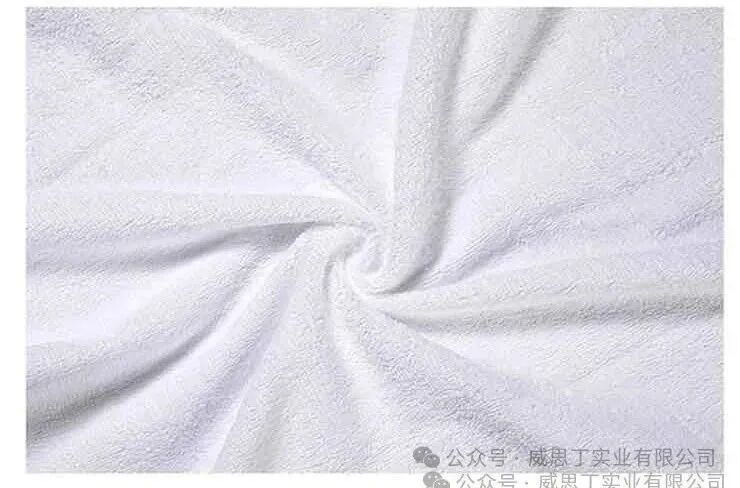
In the hospitality industry, reputation is often built in the details. When guests enter their rooms, their eyes may quickly pass over the neatly made beds and the gleaming sanitary ware, but they might question their entire stay the moment they touch a certain everyday item. Hotel towels, which are picked up, used for drying, and put down every day and have the closest contact with the skin, are a silent declaration of hygiene standards and a direct reflection of the level of service.
**Every Gram of Cotton Carries a Ton of Trust**
When guests enter a room, the first thing they often touch is the towel. A coarse and stiff towel can instantly lower their expectations of the hotel; a low-quality towel that sheds and pills may even lead to the association of “unhygienic standards.” Mengfeisi insists on using high-quality cotton yarn to weave towels with plump and resilient loops that remain fluffy even after frequent washing. The natural fibers of this kind have hydrophilic groups that make the water absorption efficiency 40% higher than that of ordinary towels. The experience of drying off quickly after a bath is itself a silent catalyst for a good reputation.
**Multiple Quality Checks to Safeguard the Bottom Line**
The “reputation minefield” of hotel towels often lies in the invisible details. Last year, a resort hotel was exposed for having “towels with an odor,” which originated from the use of cheap dyes in the production process. We adhere to the bottom line of “no formaldehyde, no fluorescent brighteners” in production. From the cotton yarn entering the factory to the finished product leaving the factory, it has to go through multiple quality checks such as pH value testing, color fastness testing, and hair shedding rate experiments.
Considering the high-frequency washing characteristics of hotels, we have specially optimized the weaving process: using 16 strands of combed cotton yarn to interweave, allowing the towel to maintain its shape even under high-temperature washing at 80℃; the loop height is controlled at 8-10mm, which ensures water absorption while avoiding the shedding problem caused by excessive fluffiness. These seemingly strict standards are actually building a reputation defense line for hotels—after all, no guest would be willing to pay for a towel that “becomes hard after three washes.”
**A Penny Saved in Cost, a Hundredfold Compensation in Reputation**
Some hotels, in an attempt to cut costs, choose lightweight bath towels with a weight of less than 300g, not realizing that it is like “picking up sesame seeds and losing watermelons.” We once did a calculation for an economy hotel: although using 400g pure cotton bath towels increases the cost per piece by 15%, the guest satisfaction rate increases by 28%, and the repeat stay rate increases by 12%, resulting in an overall increase in revenue.
The “cost-effectiveness” of high-quality towels is even more evident in long-term use. Mengfeisi’s towels, tested in experiments, can withstand up to 120 cycles of normal washing, while low-quality towels often start to fray at the edges after just 50 washes. When considering the replacement frequency, the cost of using high-quality towels is actually lower.
**Customized Services to Create Unique Memory Points**
In the fiercely competitive market of homogenization, towels can also become a “bonus point” for hotels. Over the past 27 years, we have established long-term cooperative relationships with more than 100,000 hotels and guesthouses worldwide, providing one-on-one personalized customization for hotels of different specifications and guesthouses of different styles.
As a manufacturer, we know better than anyone else: what hotels choose is not just a simple towel, but the guests’ entire expectation of “a worry-free stay.” When each pure cotton towel carries the scent of sunshine and the dedication of craftsmen, the worry of “reputation collapse” naturally disappears—after all, the tenderness that can be remembered by the skin will always be praised by word of mouth.
In the hospitality industry, reputation is often built in the details. When guests enter their rooms, their eyes may quickly pass over the neatly made beds and the gleaming sanitary ware, but they might question their entire stay the moment they touch a certain everyday item. Hotel towels, which are picked up, used for drying, and put down every day and have the closest contact with the skin, are a silent declaration of hygiene standards and a direct reflection of the level of service.
Double Festival Celebration Double Fesival Celebration
Weisdin Charity Donation
Related Article

Mid-Autumn Festival conveys yearning, National Day extols the motherland.
Double Festival Celebration Double Fesival Celebration
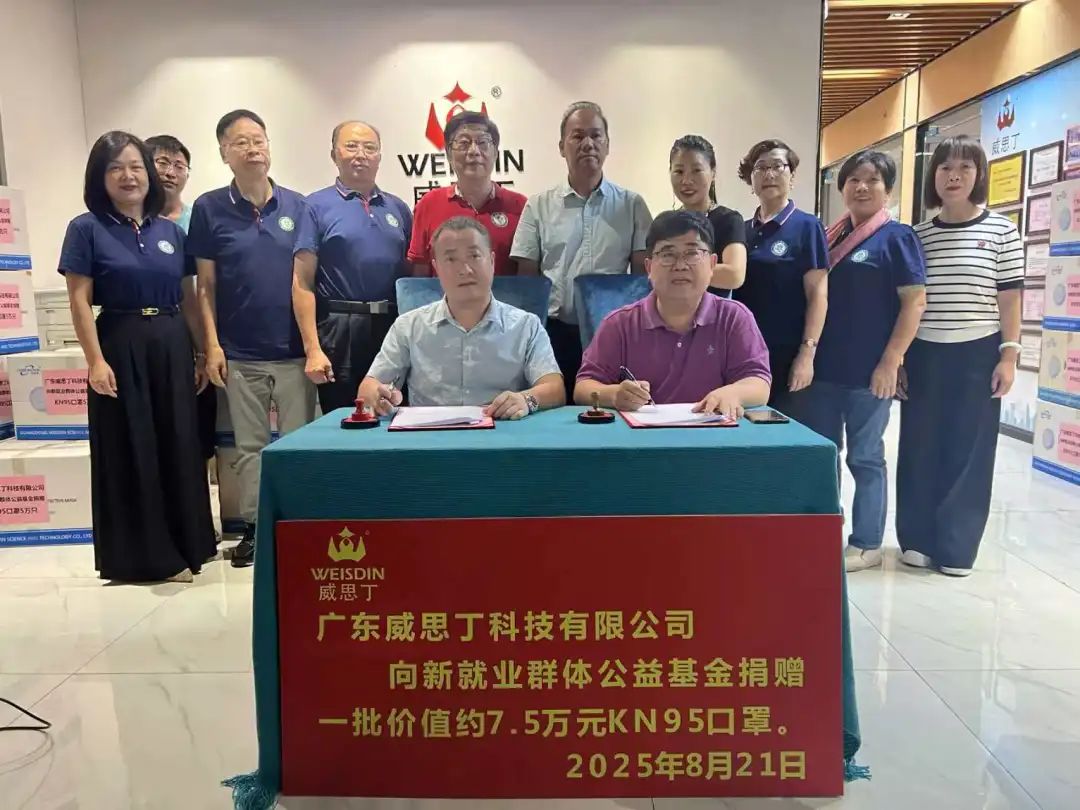
Weisdin Charity Donation, Guangdong Weisiding Technology Co., Ltd. donate a batch of KN95 masks worth about 75,000 Yuan to the New Employment Group Public Welfare Fund.
Weisdin Charity Donation